
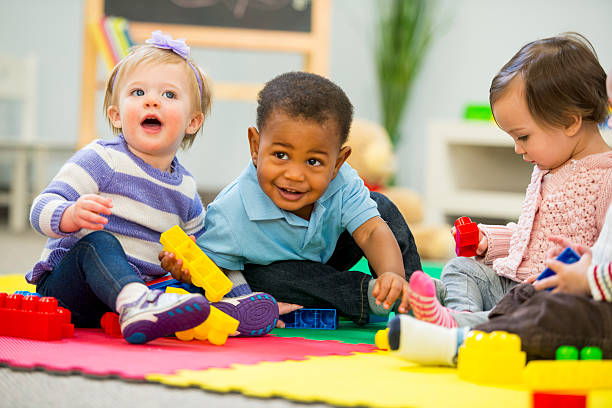
Did you know that the first 3-5 years in your child’s life are crucial in shaping the person they grow up to be? When your baby’s small it’s so easy to think ‘oh my baby doesn’t do much but sleep, feed and poo’, but all this time their heavy 1lb brain is firing on all cylinders, forging those critical neural connections that spark new pathways between the cells in their brain.
The more connections their brain makes during this stage the more they can reach their full potential in adult life, if of course these connections are made during this time. If not they’ll risk losing this window of opportunity forever. This time and opportunity cannot be recaptured.
Most brain development happens in the first 2-3 years of a child’s life. If children don’t acquire the basics of language early, for instance, it’s much more difficult to learn later. Brain pathways need to be first laid and then used, if they’re not used they’ll disappear forever, it’s a use it or lose it principle.
What can I do to help my baby develop?
As a parent your actions, behaviour and relationship have a lasting and crucial effect on your growing and developing child. In order to help your child’s brain develop to their full potential during this early stage of their life there are many things you can actively be doing, and probably already are without even thinking about it. Every time you give your baby a hug or a smile, for instance, you’re sparking more neural pathways between the cells in their brain. Communicating with them in every way possible is encouraging their development, especially when you talk, chat and sing to them.
Why should I sing to my baby?
All babies instinctively love to hear music and singing, and the voice they love to hear most of all is that of their mothers. This is the voice that’s already familiar to them, even before birth, the one they’ve been listening to from inside your womb ever since they were able to hear.
When you talk or sing to your baby and rock them in your arms, you’re creating a wonderfully rich and sensory environment to encourage their healthy brain development. This will help them when they go to school in almost every area of their life, and in particular with reading, writing and math. The effects are far reaching.
Singing to your baby will help make them feel secure, loved and comforted. We all know that if your baby becomes tired, grumpy or restless, one way to comfort them is by singing. It immediately lifts their mood, gains their attention and calms them down. It also helps the two of you to bond and enjoy each other’s company experiencing a fun and happy time together.
How does singing and music help my baby’s brain develop?
Singing and active music making have been shown to use both sides of the brain, whereas most activities use only one side. Research using PET scans and MRI imaging have allowed scientists to monitor brain activity while a person is listening to music or involved in active music making and they found that our brains neural pathways literally “light up”.
Typically only certain parts of the brain “light up” in most activities, but when a person is actively engaged with music all parts “light up” plus new neural pathways develop.
Do the very best for your child
Those first few 3-5 years are a critical and wonderful time in your baby or young child’s life and it’s important to aware of this. Not only in terms of the physical progress you can visibly see your child making but in terms of how their brain is developing too.
Once you acknowledge this, there are lots of things you can do to help encourage their brain development, and every effort you put in now will help them for the rest of their life.
If you’re interested in finding out more about how singing and music can help your baby’s development why not sign up to our newsletter or drop us a line to be kept informed of all our latest news and events.


